Delivering Confidence and Simplicity during Neuromuscular Blockade
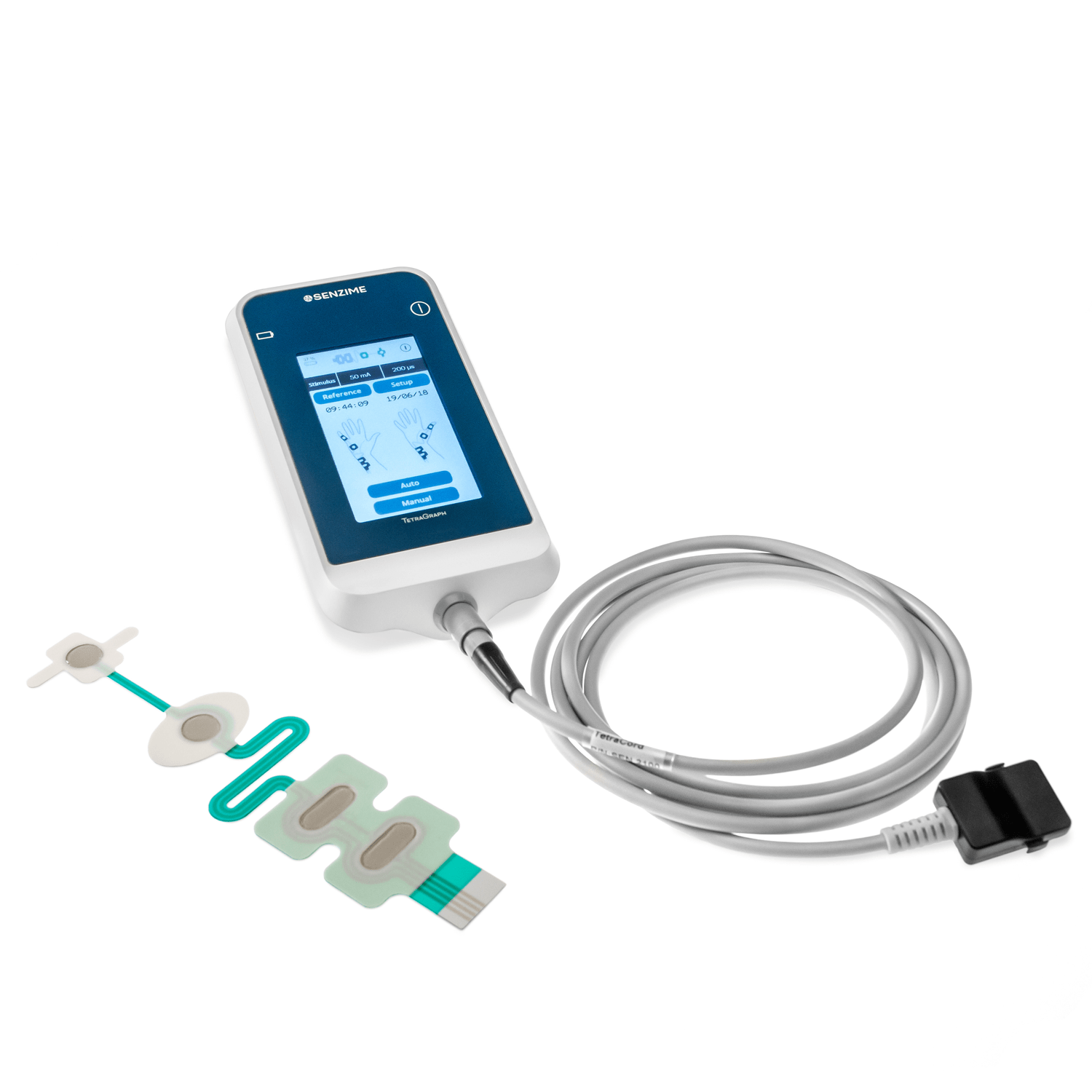
TetraGraph is a quantitative neuromuscular transmission monitor based on electromyography (EMG). The TetraGraph monitor stimulates, measures, analyzes and displays muscle function in surgical patients receiving neuromuscular blocking agents (NMBAs). NMBAs are used in almost 50% of surgical cases. Inadequate reversal of NMBAs can lead to residual neuromuscular blockade (RNMB). RNMB delays recovery and can lead to life-threatening complications. To prevent complications, quantitative neuromuscular monitoring is rapidly becoming the standard of care when NMBAs are administered.
The TetraGraph monitor is easy to use and features gold standard EMG technology for accurate measurements to bring confidence to the anesthesiology practice. The device has a quick start up time and does not require calibration. The arm can be tucked under surgical drape and can thus be used in all types of procedures, including cardiac, neuro, laparoscopic, robotic and bariatric surgeries. TetraGraph can be used from start to finish during the surgical procedure. The monitor enables objective assessment and facilitates titration of medication dosage to help clinicians determine when the patient’s neuromuscular block is sufficiently reversed to allow adequate spontaneous breathing. TetraGraph is small and portable and can travel with the patient to different settings like OR, PACU or ICU. The TetraGraph can be operated connected to mains electricity or battery operated.
Neuromuscular Transmission is the transfer of an electrical impulse between a motor nerve and its associated muscle. A Neuromuscular Transmission (NMT) monitor indicates the depth of neuromuscular block by stimulation of a peripheral motor nerve and evaluating the evoked muscle response (compound muscle action potential, CMAP). Transmission of impulses from the nerve to the muscle is blocked by neuromuscular blocking agents (NMBAs) causing transient muscle weakness and preventing the patient from moving and breathing spontaneously.
Muscle relaxation is used during general anesthesia to enable endotracheal intubation and to provide optimal surgical conditions. In critical care, muscle relaxation may be used during mechanical ventilation. In these circumstances, TetraGraph can be used as an objective monitor of Neuromuscular Transmission.
TetraGraph undertakes this function by periodically delivering electrical stimulation to the peripheral nerve and directly measuring the evoked electromyographic (EMG) response of the muscles (compound muscle action potential, CMAP). This provides a precise and automatic measurement of muscle response to a stimulus.
Like other technologies, EMG involves stimulation of a peripheral nerve and measurement of the response that is generated by the contraction of the innervated muscle. The difference from other technologies is that EMG measures an electrical event that occurs at the neuromuscular junction; the activation of postsynaptic receptors by acetylcholine (a chemical process) that converts it to a mechanical response (excitation- contraction coupling), that results in muscle contraction. Because measurement of function does not depend on physical movement (as MMG, AMG or KMG require), EMG is a better indicator of pure neuromuscular function- EMG is the new gold standard.
Neuromuscular Transmisson (NMT) is the transfer of an impulse between a nerve and a muscle in the neuromuscular junction. EMG measures the compound action potential, which is the first signal we are able to measure after neuromuscular transmission. Therefore, EMG is most specifically suited to monitor the effect of muscle relaxants without any mechanic interferences.
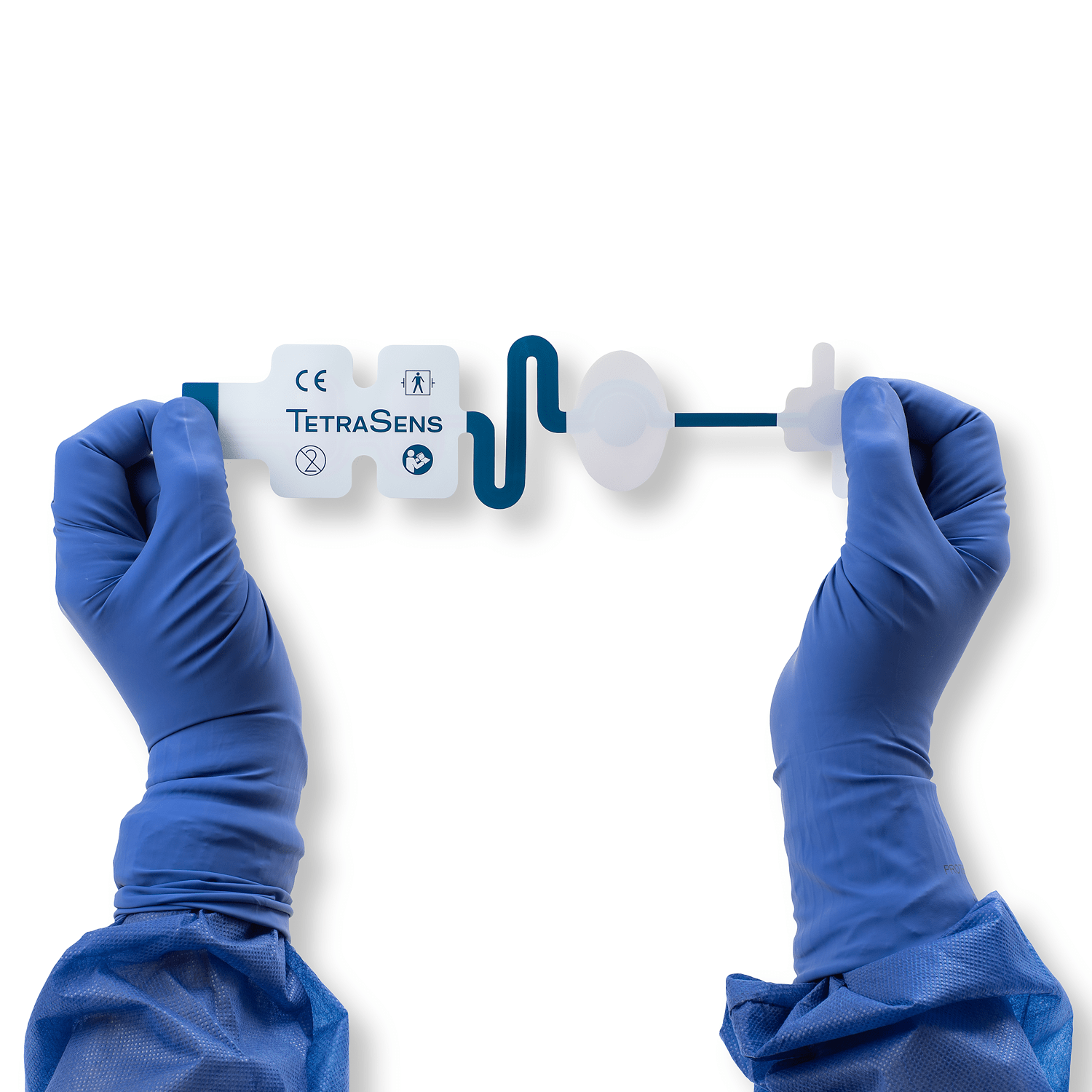
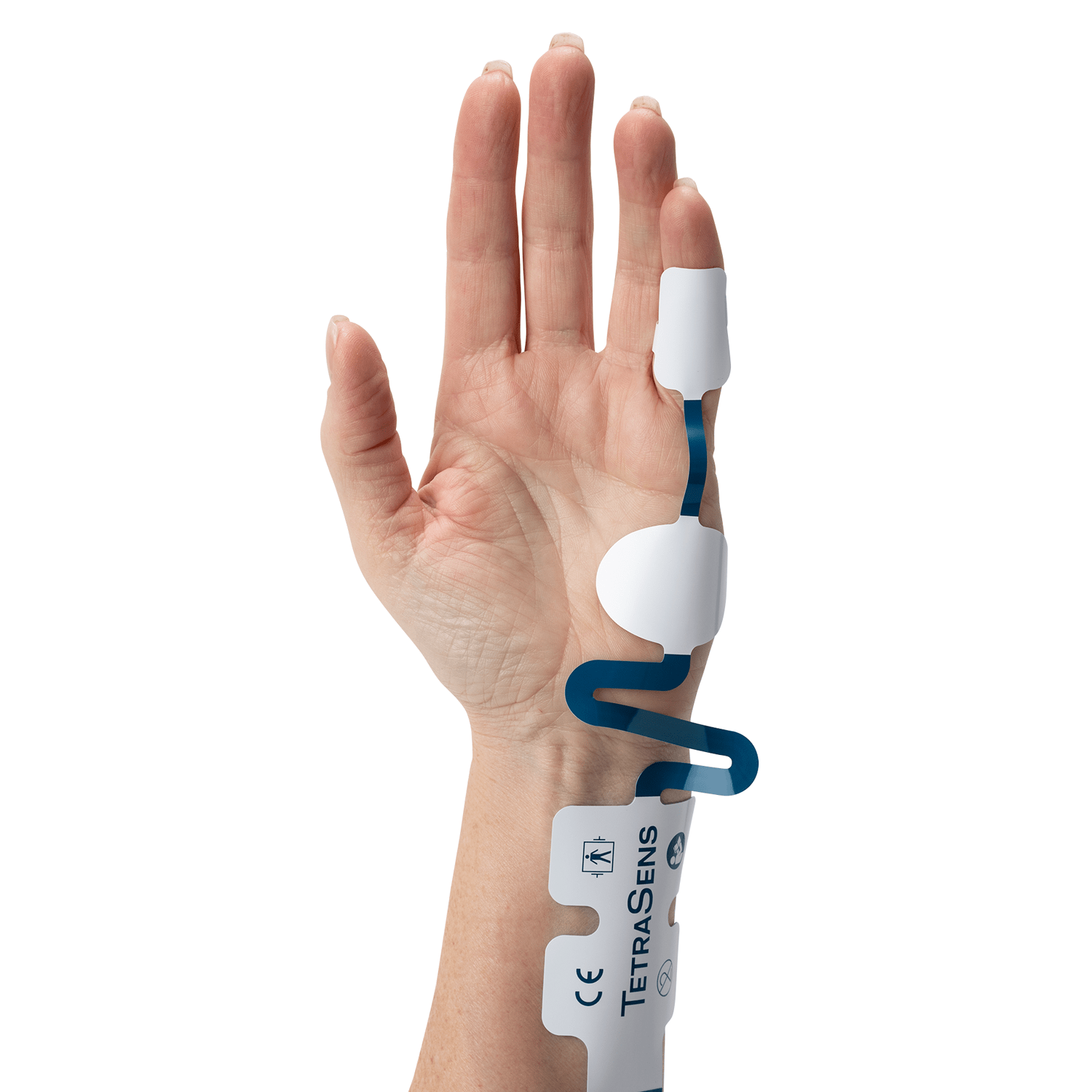
TetraSens electrode array has two proximal stimulating electrodes, one recording electrode and one reference electrode. The application is easy and quick. TetraSens electrode array is for single-patient use in order to avoid cross contamination. The electrodes can be applied on either hand, with the stimulation electrodes over the ulnar nerve at the wrist and the evoked response recorded from any of the hand muscles; typically, either the muscle at the base of the little finger (abductor digiti minimi muscle), or, more commonly, from the muscle at the base of the thumb, adductor pollicis muscle. TetraSens can also be placed on the FDI muscle (first dorsal interosseous). When the hand is inaccessible, the posterial tibial nerve (flexor hallucis brevis muscle), can be used for NMT monitoring.
Service is essential to keep medical equipment operational and safe. Our Nordic service team consists of experienced service technicians stationed across the Nordic countries. Our service technicians are ready to take on your every service need.”

Meeting the needs of both medical staff and patient
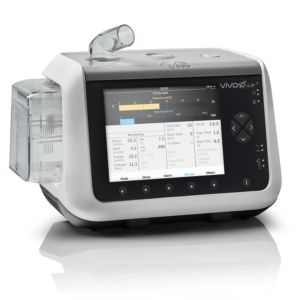
The Vivo 65 is designed to meet the needs both of medical staff and a wide range of patients. It combines comfortable and controllable ventilation with excellent monitoring capabilities to potentially reduce readmissions to acute care facilities.
The Vivo 65 is an advanced homecare ventilator designed to deliver secure and comfortable (life-support) treatment to adult and pediatric patients from 5 kg. The Vivo 65 can be used for a wide variety of patients thanks to a comprehensive set of modes, circuits and accessories.
The dual limb circuit allows for measurement of exhaled volumes providing additional security. The extensive moni- toring capabilities help obtain a better insight into the quality of ventilation. The Vivo 65 is an excellent choice for mechanical ventilation at home, in the hospital and in long- term care facilities. The Vivo 65 is prepared for connection to Breas cloud solutions.

Designed For EveryDay Life– Now with Auto-EPAP
To meet the needs connected to a wide range of respiratory conditions a ventilator must offer outstanding clinical versatility and performance. But equally important, it must be designed around the patient’s life, activities and home environment. Vivo 45 LS is a life support ventilator for adult and pediatric patients from 5 kg. The Vivo 45 LS is designed to maximize independence and mobility.
Designed for everyday life
The ultimate training tool
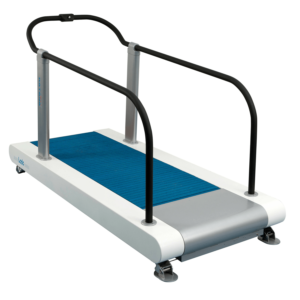
Incorporate a new dimension into your training with the patented WOODWAY Curve. The completely self-powered, manual WOODWAY Curve Treadmill offers a one-of-a-kind workout experience that requires zero electricity.
Feel the freedom of this totally manual treadmill while running or walking on the unique curved running surface where you are the motor. The Curve Treadmill challenges the entire body while burning up to 30% more calories than any other treadmill.

For accurate and safe bronchial challenge testing
Vyntus APS is an Aerosol Provocation System. Up-to-date and sophisticated electronics and mechanics allow for optimal use of its nebulization technology with precise dosing. For the observation measurements Vyntus APS combines with the Vyntus PNEUMO and/ or the Vyntus IOS in one system.
APS nebulizer system integrates into Vyaire MasterScreen™ and Vyntus™ instruments – Spirometry, IOS Impulse Oscillometry, Rocc and BODY Plethysmography. The nebulizer system is powered by SentrySuite™ software and is able to test a broad age range: from 4 years to adult. Choose between single and multiple concentration testing.