Accurate lactate measurement to drive performance improvement
The Lactate Scout 4 is a simple and reliable lactate meter perfect for training outdoors, in the gym or for analysing performance in a laboratory. The Lactate Scout 4 makes is easy to handle and allows for rapid assessment of lactate levels.
The Lactate Scout 4 is ideal for both coaches and athletes to assess endurance, devise optimum training programmes, avoid overtraining and use metabolic information to help set target heart rate zones.
The handheld Lactate Scout 4 requires only 0.2 µl of capillary blood, provides results in 10 seconds and can store up to 500 results. Lactate Scout 4 connects with Bluetooth® enabled heart rate monitors and features a stopwatch function to help analyse performance. With an integrated step test function and Bluetooth® connectivity, the Lactate Scout 4 is one of the most advanced hand-held lactate analysers on the market.
Easy to use
Fast and accurate
Imprecision:
Practical and reliable
Performance measurement
During high-intensity exercise, the body produces lactate faster than it can be metabolised and removed from the blood stream. This leads to accumulation of lactate in the bloodstream.
Up to a certain threshold, the body can clear lactate at a rate at which, although there is an elevated concentration of lactate in the blood, the concentration does not impede muscle function.
Higher intensity exercise will lead to this threshold being passed, such that lactate production exceeds lactate clearance. The biochemical processes associated with increased lactate places muscle cells under stress. It is therefore important to determine the lactate threshold at which training is most effective.
Exercising at higher-intensity levels will result in exceeding the anaerobic threshold and cause a rapid increase in blood lactate concentration. This threshold varies from person to person, and an individual’s threshold can be determined using a step test. In a step test, the intensity of training gradually increases at defined intervals, e.g. on a treadmill or exercise bike or in a field test. The blood lactate concentration is measured at the end of each interval and plotted against the load value on a chart. The resulting curve indicates the threshold value. The greater the intensity of the athlete’s exercise at their anaerobic threshold indicates a fitter athlete.
If a training programme is designed so that exercise occurs in the anaerobic threshold range, it can have a positive impact on the metabolism, increase muscle cell contractions, improve muscle cell repair, increase blood capillaries and improve cardiac function. The body then produces energy more efficiently, even when exercising at higher levels of intensity.
A lactate analyser is therefore useful in fitness training and cardiovascular training, to help increase endurance without overtraining.
Lactate is a source of energy and is metabolised by muscle cells. The more efficiently lactate is metabolised the lower the blood lactate concentration will be during exercise. Additionally, excess lactate will be cleared from the circulation more rapidly during the post-exercise period.
Lac [blood] = Lac [produced] ¬ Lac [eliminated]
Endurance athletes should aim to achieve an elevated lactate equilibrium – a balance between the production and breakdown of lactate.
For training to achieve positive results and improve performance, it is therefore recommended to exercise at just below the anaerobic threshold.
Service is essential to keep medical equipment operational and safe. Our Nordic service team consists of experienced service technicians stationed across the Nordic countries. Our service technicians are ready to take on your every service need.”

Simplicity at your Fingertips – Now with Auto-EPAP
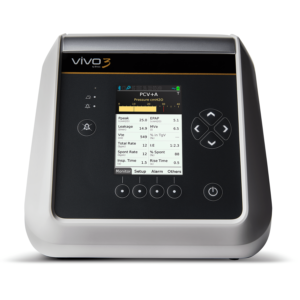
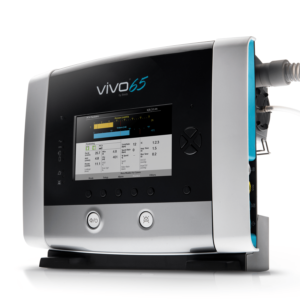
The Vivo series is a new generation ventilators designed for personalized and comfortable non-invasive respiratory support for non-dependent patients with chronic breathing insufficiency.
The intuitive interface ensures ease of use. A comprehensive set of modes and extensive monitoring capabilities allow for great flexibility, making the ventilator a perfect choice for a variety of patients.
For accurate and safe bronchial challenge testing
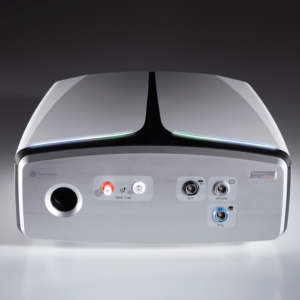
Vyntus APS is an Aerosol Provocation System. Up-to-date and sophisticated electronics and mechanics allow for optimal use of its nebulization technology with precise dosing. For the observation measurements Vyntus APS combines with the Vyntus PNEUMO and/ or the Vyntus IOS in one system.
APS nebulizer system integrates into Vyaire MasterScreen™ and Vyntus™ instruments – Spirometry, IOS Impulse Oscillometry, Rocc and BODY Plethysmography. The nebulizer system is powered by SentrySuite™ software and is able to test a broad age range: from 4 years to adult. Choose between single and multiple concentration testing.

Untethered six-minute walk test
Vyntus™ WALK allows patients to perform an untethered six-minute walk test (6MWT) by wearing wireless sensors that communicate data to a technician-held tablet PC. Standardize testing to the recommended is 6MWT protocol, because consistent testing yields consistent data for comparison
The system is both patient- and technician-friendly and because we know a single sensor does not fit all clinical needs, comes with an array of easy-to-wear sensors. Because standardizing the complete testing process is critical to meaningful data for patient trending, Vyaire has integrated the complete ATS testing standards in the workflow-driven tablet software application.

Vyntus™ SPIRO PC Spirometer
The Vyntus™ SPIRO was born out of Vyaire’s obsession to perfect a spirometer that is easy-to-use and has the flexibility to provide accurate results for both the general user and sophisticated lab. Stationary or portable PC spirometer as a stand-alone device or as part of the SentrySuite network.
Thousands of PFT labs depend every day on Vyaire’s proven, accurate and reliable JAEGERTMpneumotach. For hundreds of publications, the JAEGER pneumotach was the device of choice.
Its excellent dynamic range effectively tests a broad population from small children to athletes.