Home asthma diagnostics and monitoring for young children
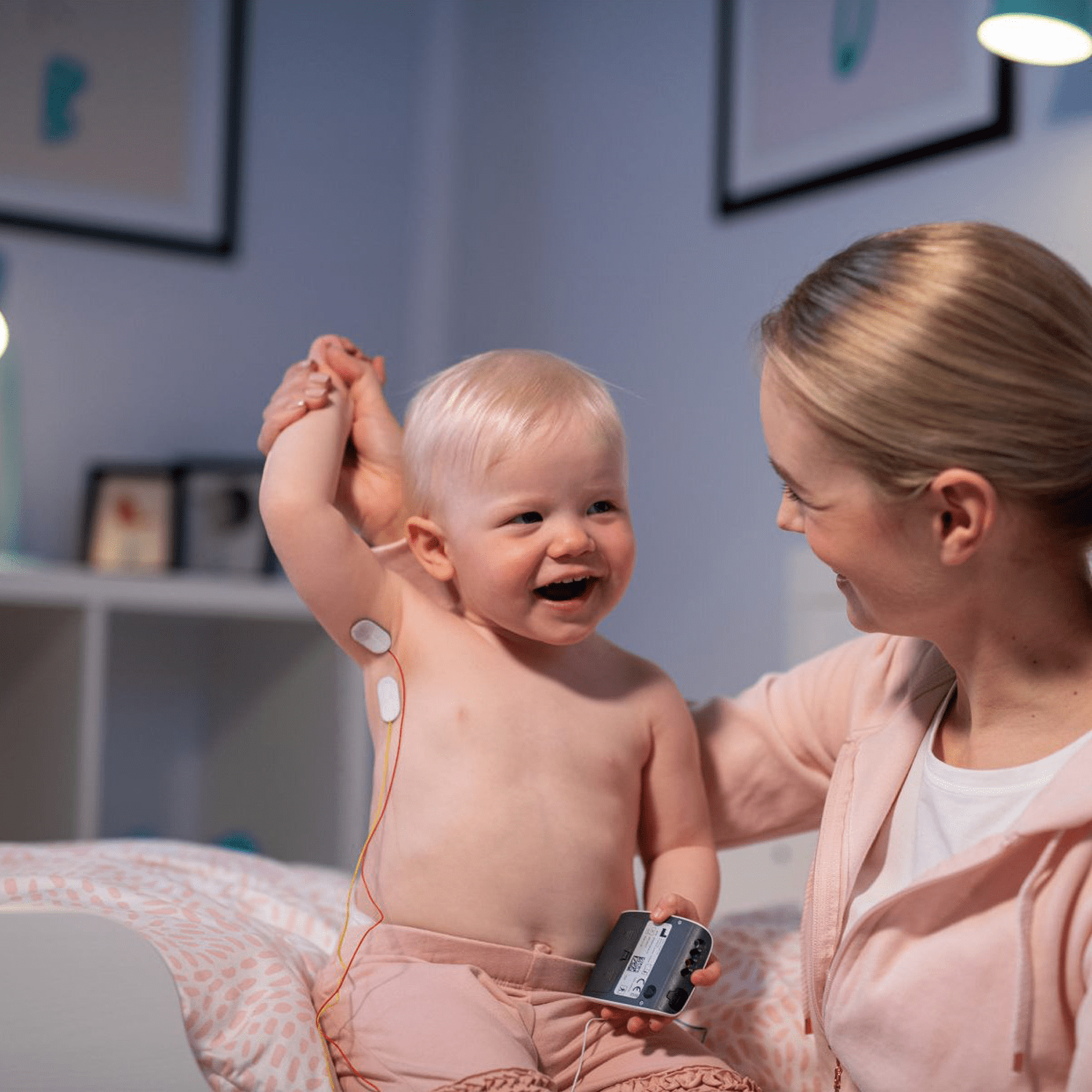
A new paradigm for the assessment and management of asthma. The Ventica system provides physicians with a reliable, quantitative assessment of asthmatic children aged 5 years and younger. Using the Ventica Recorder at home requires just a few, easy steps, which can be easily performed by the parents.
Measurement is comfortable for the child as Ventica®’s measurements are made non-intrusively while the child is asleep. Proprietary algorithms analyze a child’s breathing data, to allow for a reliable determination of their Expiratory Variability Index – EVI.
Lung function testing is the cornerstone of both the diagnosis and monitoring of asthma. Measurement of peak flow rate and spirometry are well-established techniques for older children and adults. They are seldom suitable for young children due to the need for collaboration during the measurement.
Ventica enables routine testing of lung function in small children for the first time. Even better, measurements are done overnight while the child is asleep at home – under parental supervision and guidance. Ventica lung function test has been validated for children aged five years and younger. Ventica is a reliable method for pediatric lung function testing, with a measurement success rate demonstrated to be 90%.
Helps ensure that the child’s asthma is brought under control
Routine use of the Ventica System can help you to keep the asthma under control and alert you to a worsening of the asthma or other deterioration in lung function.
Modifying or stopping treatment
When complemented by other clinical and diagnostic assessments, Ventica can offer you an indication of changes in child’s asthma allowing for early intervention and modification of the treatment level, up to a potential treatment stop based on an objective measurement of lung function.
Diagnosing paediatric asthma
Ventica offers quantitative objective data to support the asthma diagnosis, when complemented by other clinical and diagnostic assessments.
Ventica lung function testing is based on a novel application of impedance pneumography indirectly measuring lung volume and derived flow-volume loop profiles using a non-intrusive chest electrode configuration.
The Ventica software analyzes the variability in the shape of the flow-volume curves during tidal breathing. Only data recorded from periods of restful sleep is used. The final result of the analysis is the child’s Expiratory Variability Index (EVI).
A child’s EVI is associated with bronchial obstruction and helps in solving the medication dilemma. Importantly, the child’s EVI reflects their natural “real- life” condition, as no external provocation is involved.
Allowing frequent nightly measurements, Ventica EVI results can reveal if a child has recurring bronchial obstructions (low EVI), indicating recurrent wheeze or asthma. Likewise, for healthy children, EVI varies within the normal range.
Proprietary analysis of a child’s whole-night respiration data allows the Ventica System to report a child’s Expiration Variability Index, EVI. A bar chart displays how the child’s EVI compares to reference indices obtained from healthy control subjects. The bar chart uses an easy-to-interprete traffic light color scheme, with a numeric reference scale.
EVI describes the amount of variability between individual expirations of a child during a full night’s sleep. Children with a high risk of persistent asthma have been reported to have EVI values lower than 13, an index range that clearly falls into the lower, red section of the bar chart. Children at a lower risk of asthma, or those using correct medication for asthma control, exhibit EVI values of 14 or higher, an index range that falls into the upper, green area of the bar chart. The Ventica EVI result should be interpreted in conjunction with other clinical and diagnostic assessments.
EVI is based on calculating correlations between the initial stages of the expiratory flow-volume curves recorded during the child’s entire night’s sleep. The Ventica analysis results in a large number of curve correlation values. The child’s reported EVI is derived from the range of these correlation values, statistically the inter-quartile range of the calculated correlations. Therefore, a low EVI indicates a lack of variability in breathing, a condition associated with airway obstruction and asthma.
When calculating a child’s EVI, the Ventica Analytics software only uses raw data recorded from periods of restful sleep. Periods of restless movement, coughing or crying, for example, are filtered out of the full night’s dataset by sophisticated artefact-detection algorithms.
Ventica Recorder
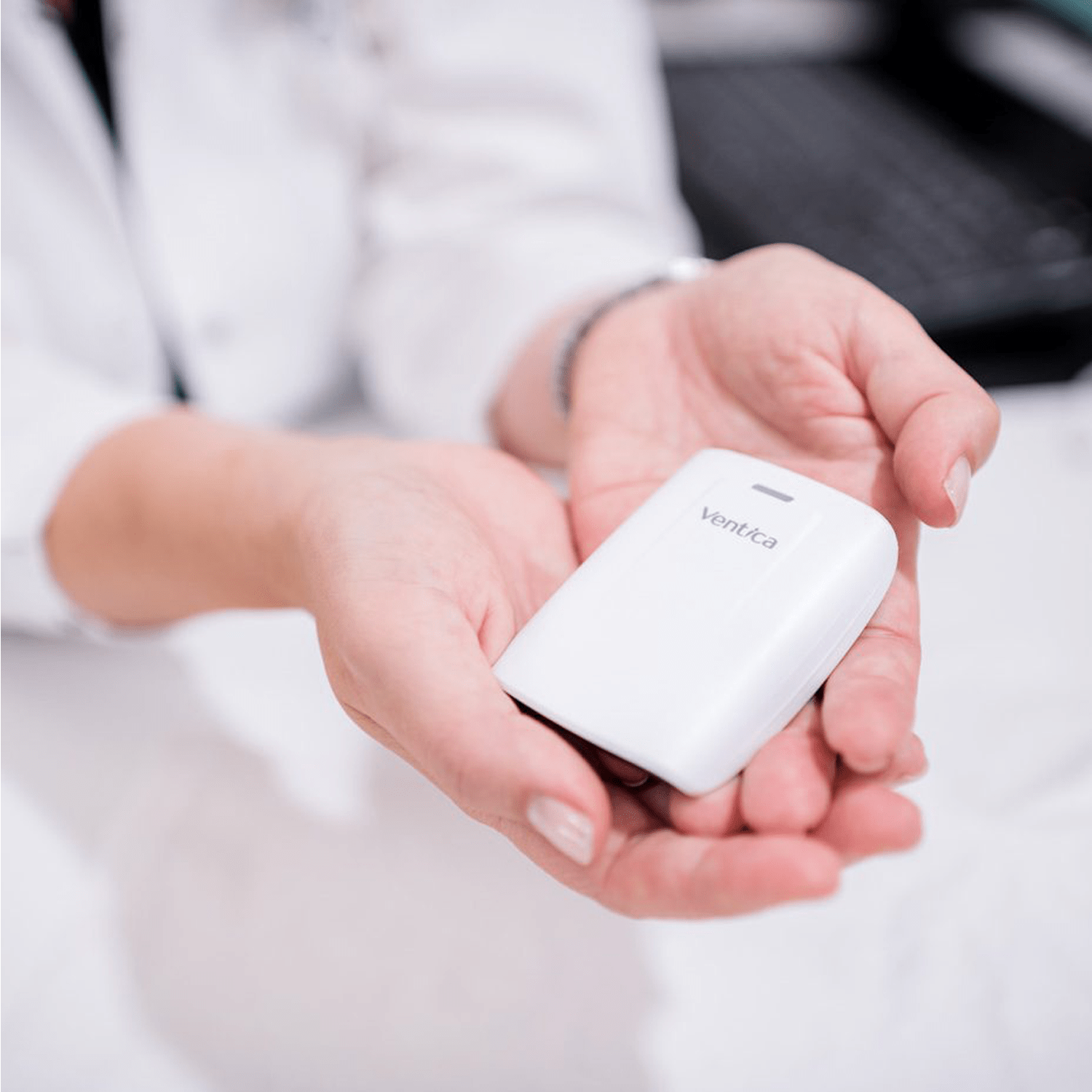
The miniature Ventica Recorder is a battery-operated device for recording and storing the impedance data acquired from the chest electrodes. After night-time recordings, the parents return the device to the clinic for data transfer, automated data analysis, and clinical interpretation.
Ventica Analytics Software
The Ventica Analytics Software is designed for use by trained healthcare professionals. Intuitive and easy-to-learn, the software is used to control the Ventica Recorder, analyze the data and manage patient records. Although the Ventica Analytics Software is available as a cloud service, it can also be installed on a local server.
Service is essential to keep medical equipment operational and safe. Our Nordic service team consists of experienced service technicians stationed across the Nordic countries. Our service technicians are ready to take on your every service need.”

Meeting the needs of medical staff and patients
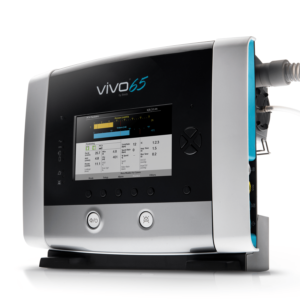
The Vivo 55 is an advanced homecare ventilator designed to deliver secure and comfortable treatment to patients from 10 kg. The Vivo 55 can be used for a wide variety of patients, both life-support and non life-support, thanks to a comprehensive set of modes, circuits and accessories.
The Vivo 55 is designed to meet the needs both of medical staff and a wide range of patients. It combines comfortable and controllable ventilation with excellent monitoring capabilities to potentially reduce readmissions to acute care facilities. The extensive monitoring capabilities help obtain a better insight into the quality of ventilation. The Vivo 55 is an excellent choice for mechanical ventilation at home, in the hospital and in long-term care facilities. The Vivo 55 is prepared for connection to Breas cloud solutions.
Helping heal one step at a time
From rehabilitation to orthopedics to physical therapy, the PPS (Professional Power System) Med treadmill provides comfort and assistance to patients who require walking support. This treadmill can accommodate any user’s pace with an absolute zero start speed with increments of 0.1 mph.

For accurate and safe bronchial challenge testing
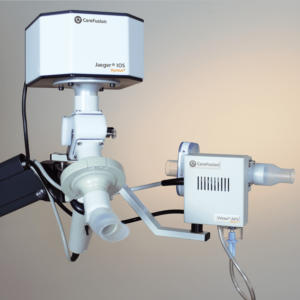
Vyntus APS is an Aerosol Provocation System. Up-to-date and sophisticated electronics and mechanics allow for optimal use of its nebulization technology with precise dosing. For the observation measurements Vyntus APS combines with the Vyntus PNEUMO and/ or the Vyntus IOS in one system.
APS nebulizer system integrates into Vyaire MasterScreen™ and Vyntus™ instruments – Spirometry, IOS Impulse Oscillometry, Rocc and BODY Plethysmography. The nebulizer system is powered by SentrySuite™ software and is able to test a broad age range: from 4 years to adult. Choose between single and multiple concentration testing.

A step up in professional exercise diagnostics
The Vyntus™ CPX is an accurate, reliable system that collects full breath-by-breath data and allows the determination of a subject’s metabolic response. It can be used on adults and children, whether patients or athletes.
The Vyntus™ CPX is the result of over 50 years of experience in the development of CPET devices. Together with the Vyntus™ ECG, this Metabolic Cart is a powerful combination.